The 2026 Experience Economy Report
Learn how lifecycle commerce turns venue commerce into infrastructure: smoother fulfillment, lower concourse congestion, labor resilience, and revenue lift driven by conversion—not price pressure.
Lifecycle Commerce Revenue
Live events remain one of the most powerful drivers of consumer spending tied to physical presence. Even as digital entertainment expands, demand for in-person experiences continues to grow in cultural and economic importance. Yet despite strong attendance, many venues still face a hidden revenue ceiling—one that has little to do with fan interest.
By 2026, industry research and operator feedback consistently point to the same issue: a growing disconnect between purchase intent and successful fulfillment. This gap, often described as transactional friction, represents revenue lost not because fans are unwilling to buy, but because queues, staffing limits, and legacy point-of-sale existing operations cannot keep up during peak moments.
For large-format venues, this friction acts like a per-event liquidity constraint. The bottleneck is not demand—it is the structure and timing of commerce itself.
From Sale to Lifecycle
Historically, venue commerce has been anchored to the point of sale: a fixed, reactive endpoint that only activates when a fan physically reaches a counter. This model assumes demand and fulfillment must occur simultaneously, within narrow time windows, at a single location.
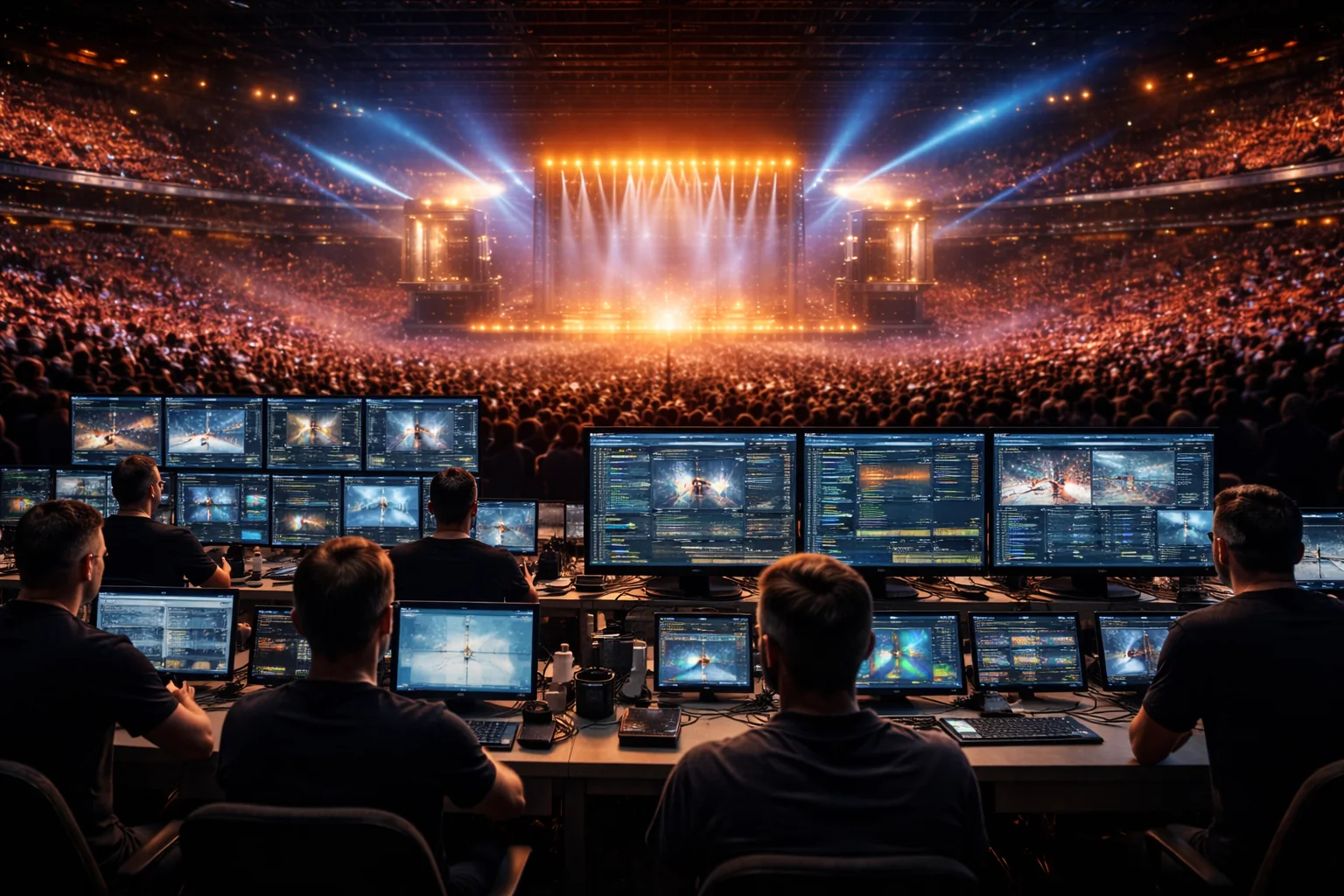
Under modern attendance patterns, that assumption breaks down. Halftime rushes, intermissions, and post-headliner surges overwhelm physical infrastructure, leading to:
- Congested concourses
- High purchase abandonment
- Operational strain on staff
- Revenue loss due to timing constraints
Revenue is lost not because demand disappears, but because it cannot be processed in time.
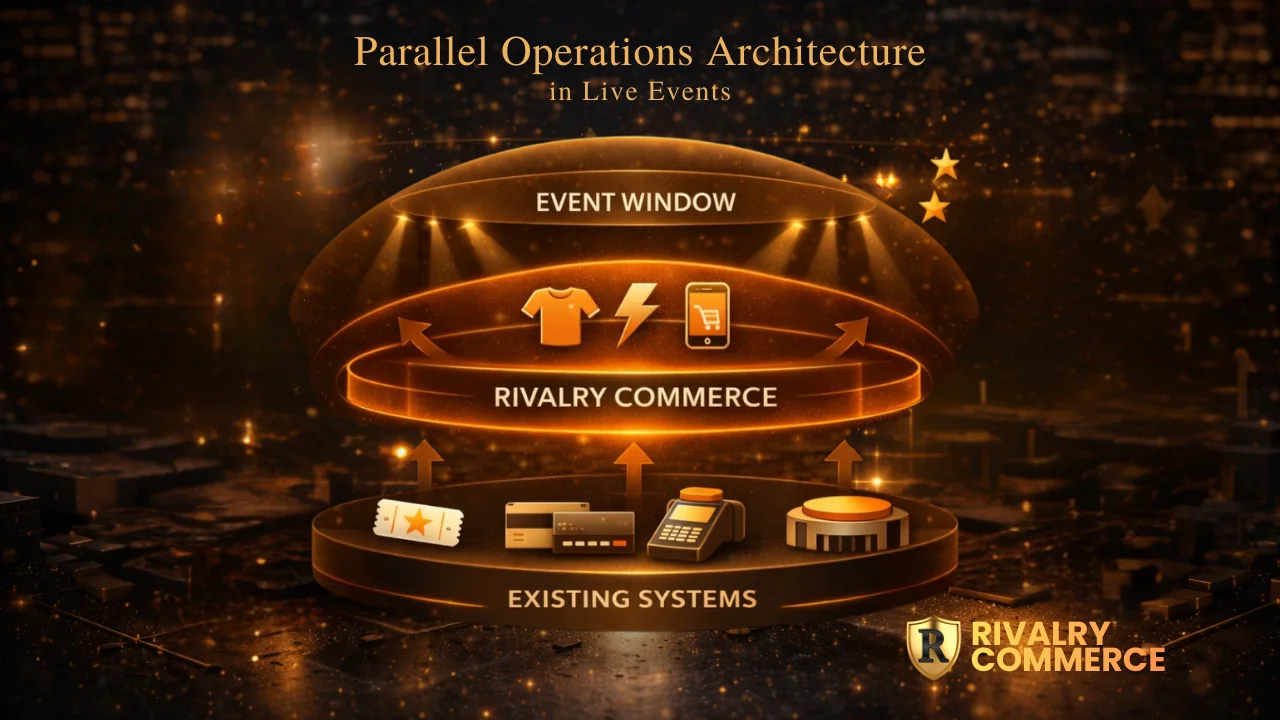
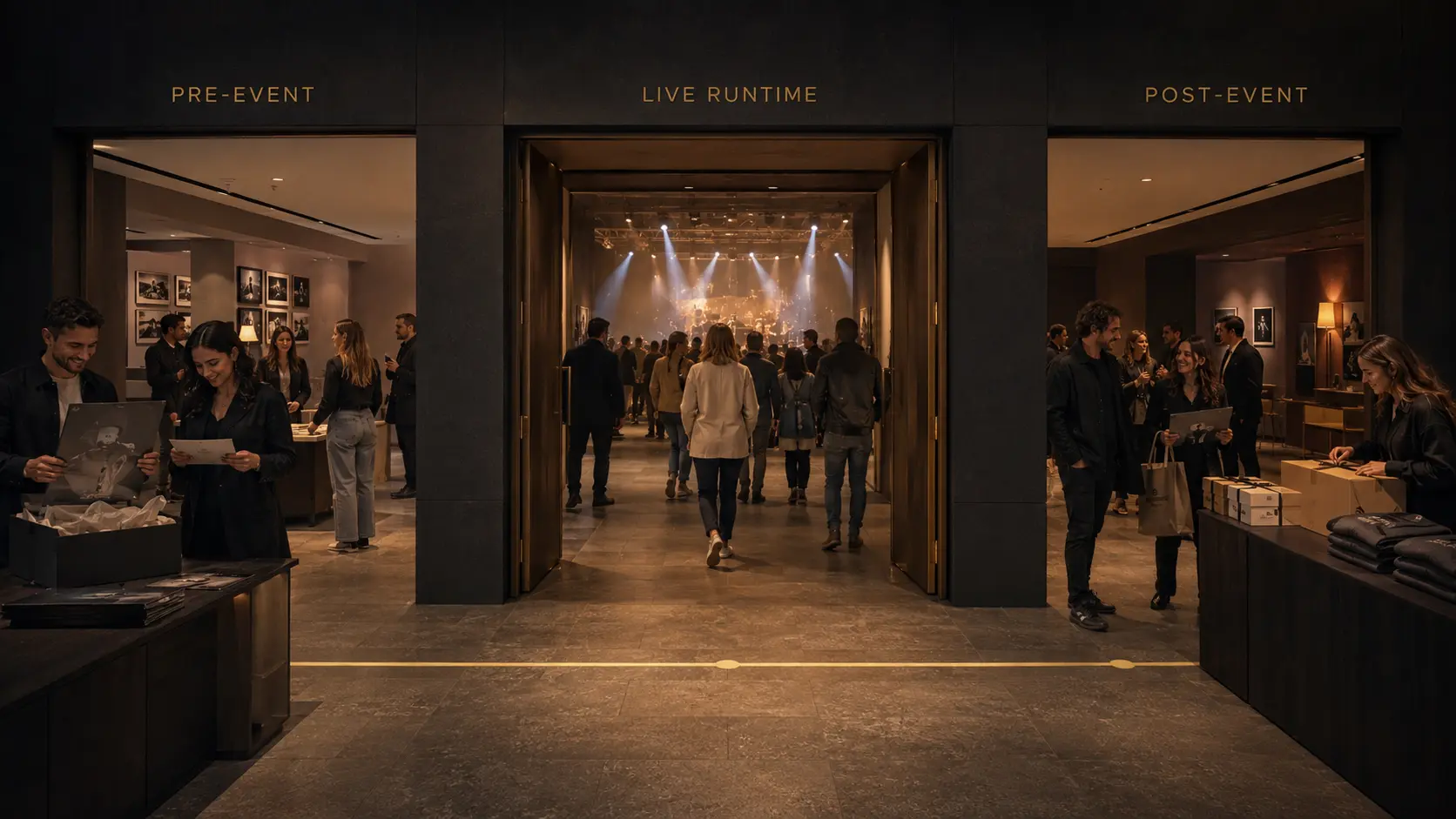
Lifecycle commerce reframes the event as a time-based existing operation, distributing access across the full event journey. Pre-arrival ordering captures high-intent demand before time pressure exists. During-event digital-first ordering operates quietly in the background, minimizing disruption. Post-event fulfillment extends revenue opportunities beyond the final whistle. What changes is not what is sold, but when and how access is granted.
Commerce as Infrastructure
In a lifecycle model, commerce functions like infrastructure—persistent, load-balanced, and resilient under peak conditions. Instead of concentrating transactions into short surges, demand is distributed across time, reducing volatility rather than shifting it.
Production becomes more predictable as pre-orders and digital commitments provide early visibility into demand. Fulfillment workloads smooth out as teams move from reactive surge management to steady-state execution. Front-of-house congestion declines as physical lines are replaced by digital queues, restoring concourses to their primary purpose: flow.
The result is a venue environment that feels less like a series of obstacles and more like a seamless experience.
Why Flow Drives Value
In the modern experience economy, value increasingly comes from eliminating friction rather than adding spectacle. While headline moments attract attention, sustained economic impact comes from uninterrupted movement of people and transactions.
Lifecycle commerce closes the "friction gap"—lost revenue and diminished fan satisfaction caused by long lines, crowded concourses, and operational bottlenecks. By treating commerce as quiet infrastructure, venues ensure the commercial engine supports the experience instead of competing with it.
Efficiency becomes experiential: when flow is mastered, fans stay immersed while revenue capture becomes more predictable and resilient.
Gains Without Pricing Pressure
Across pilots and industry benchmarks, the comparison between legacy and lifecycle models is consistent. Counter-centric existing operations are constrained by register capacity and human transaction speed, creating hard revenue ceilings during peak windows. Lifecycle deployments shift the constraint away from physical choke points by distributing access across time and digital touchpoints.
The outcomes are repeatable:
- Higher transaction throughput — More orders processed efficiently
- Lower purchase abandonment — Customers complete transactions before leaving
- Smoother fulfillment workloads — Operations team manages steady state instead of surges
- Modest per-capita lift — Driven by conversion, not price increases
These gains reflect operational efficiency, not changes in ticket prices or fan demand.
Labor Resilience
Labor availability remains one of the most volatile inputs in live event operations. In traditional models, labor is directly tied to transaction volume—staffing gaps immediately translate into lost revenue.
Lifecycle commerce decouples throughput from front-of-house staffing. Reduced reliance on cash handling, increased self-service and pre-commitment ordering, and labor reallocation toward fulfillment, quality control, and experience oversight all contribute to a more stable operating model.
Digital-first ordering also lowers manual entry errors, reducing waste and reconciliation overhead. The result is not labor elimination, but labor resilience.
Strategic Takeaway
The competitive advantage in live events is no longer defined by physical scale, but by mastery of flow. Expanding counters or concourses fails to address the temporal bottlenecks inherent in live events. Lifecycle commerce treats the venue as a dynamic existing operation where commercial access is decoupled from physical constraints.
When transactions are no longer forced through a handful of high-stress minutes, revenue becomes more resilient, operations become more predictable, and the fan experience improves naturally. Commerce shifts from being an operational hurdle to a seamless support existing operation—quietly enabling the experience while capturing the full value of existing fan intent.
Methodology Note
This report synthesizes publicly available industry research, operator interviews, and observed patterns across recent live-event deployments. The analysis focuses on operational structure and timing rather than pricing strategy or consumer demand forecasting.
Industry Context and Reference Framework
The framing in this report reflects a synthesis of established research on consumer experience, transaction friction, and operational efficiency in live-event environments, including work from:
- McKinsey & Company — The Future of Consumer Experience
- Oracle Food & Beverage — Fan experience and ordering studies
- Stadium transaction throughput benchmarks (2025)
- Rivalry Commerce — Lifecycle Commerce Framework