Venue Economics & Structural Alignment: Beyond the Zero-Sum Game
Layer, Not Takeover
One of the biggest headaches in live event commerce is the fear of "the big change." When you mention new ways of doing business to a venue manager or a tour director, their first thought is usually about the stress of a total existing operation overhaul. They worry they'll have to rip out their existing Point of Sale (POS) gear, retrain an entire stadium of workers, or deal with technical glitches that could delay doors. It's a lot of pressure, and honestly, nobody in venue operations has the time for that kind of disruption during a busy tour.
The beauty of a Licensed Commerce Layer (LCL) is that it doesn't ask anyone to start from scratch. Think of it as a "digital skin" that fits right over the top of the existing operations you already know and trust. It's a layered deployment, which is just a fancy way of saying it works alongside the venue's current tech without breaking anything or trying to move in and take over. It's not a competitor to the venue's infrastructure; it's more like a specialized partner that adds a new level of capability.
Instead of a "rip and replace" nightmare, the LCL provides architectural control in a way that's actually helpful. It's like adding a high-tech navigation existing operation to a car you already love driving. You don't need to learn a new engine or buy a new vehicle; you're just getting better existing workflows to find the best route. This approach keeps the vibe positive because it respects the venue's existing workflow. It allows the venue to keep doing what they do best while the LCL handles the specific, high-pressure rules of event-day transactions. It's about making the current existing operation smarter and more efficient, without the headache of a "forced upgrade."
Artist Rules
Every tour has its own unique heartbeat. What works for a high-energy pop show isn't necessarily going to feel right for a country artist or a rock band. In the past, trying to make the live event merch experience match the artist's vision was a manual, stressful job. You had to hope everyone was on the same page about when to start selling or which items were allowed to be featured at certain times. It was a lot of "fingers crossed" management, which usually leads to mistakes that frustrate the fans and the crew.
This is where the Licensed Commerce Layer (LCL) really shines as a rights-holder governance engine. Basically, it gives the artist and their team the remote control for the commerce side of the show. Instead of the venue having to guess the "vibe," the artist sets specific rules for their tour sequence. They can decide exactly when the "buying window" opens—maybe it's the moment a fan gets their ticket confirmation, or maybe it's a special "authorized moment" right after the encore. Because these rules are baked into the layer, they happen automatically and perfectly every single night of the tour.
The best part is that this creates a very positive, organized environment. The venue staff doesn't have to stress about managing the "rules" because the LCL enforces them. It handles the event-relative timing, which is just a simple way of saying the existing operation knows exactly what time it is in the show's lifecycle. If it's not the right time to sell a specific limited-edition item, the existing operation won't allow it. This keeps the commerce feeling like a natural part of the fan experience rather than something that's just "tacked on." It gives the artist total control over their brand without adding any extra work for the venue's team.
Venue Partnership Hub
In the traditional world of live events, a venue is often seen as just a building—a place where people show up, sit in a seat for a few hours, and then leave. Because of that, the venue usually only makes its money in a very short window of time. This creates a lot of pressure to "squeeze" as much revenue as possible while the fans are physically inside the building. But when you add a Licensed Commerce Layer (LCL), you're enhancing the existing workflows the venue already has, turning that space into a high-tech fulfillment hub without changing its footprint.
This shift changes the whole relationship from "landlord and tenant" to a real, working partnership. By using the LCL, the venue can offer things like "buy now, pick up later" or "scan-to-ship" options. This is a huge win for everyone. For the fan, it means they don't have to carry a heavy bag of merch around all night or stand in a crowded line during their favorite song. For the venue, it means they can move the "crowd" away from the physical stands, which makes the hallways safer and easier to walk through. You're not replacing their stands; you're just giving them a new way to handle the flow of people.
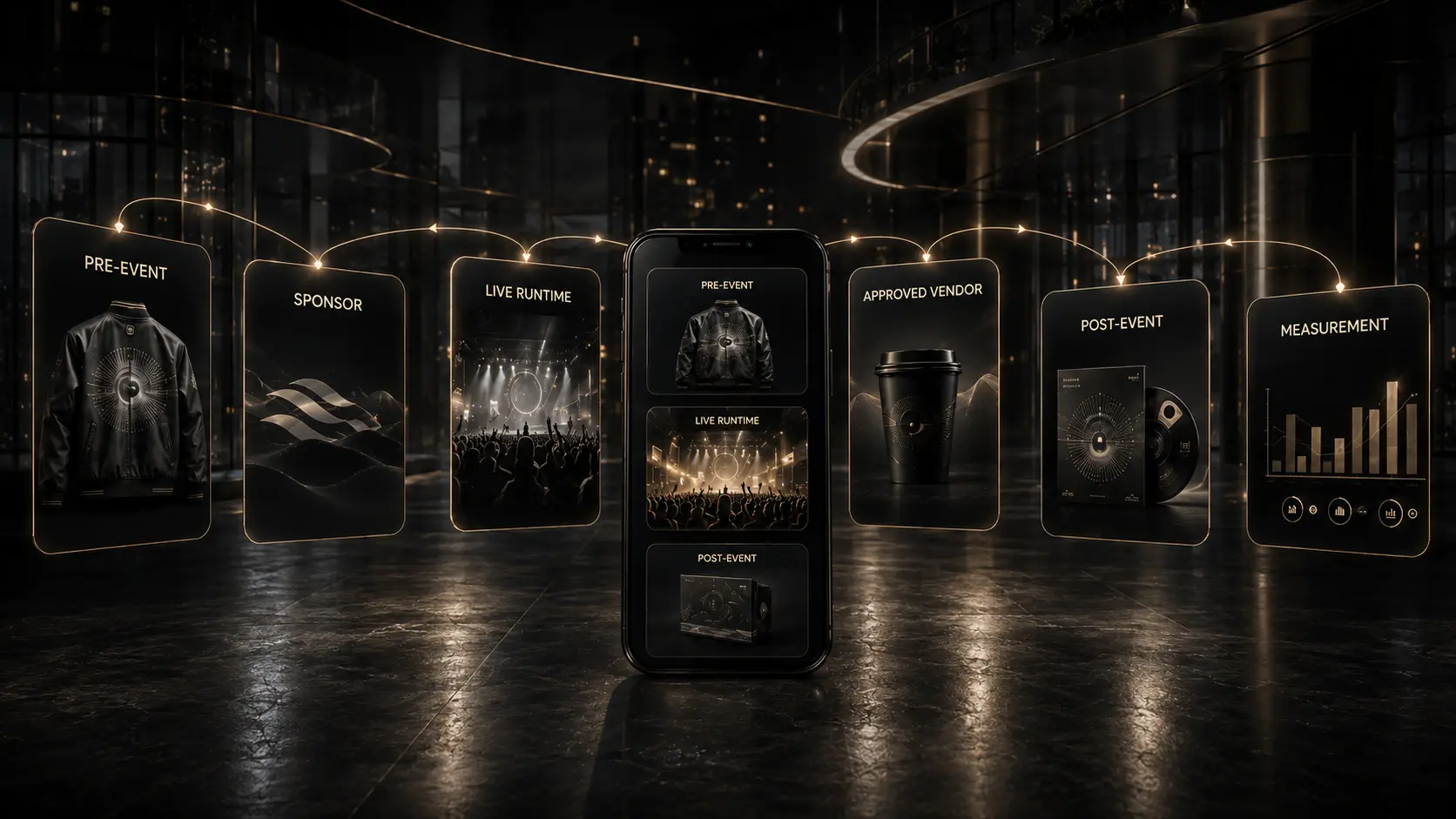
When the LCL is in place, the venue stays relevant throughout the entire event lifecycle. It's not just about what happens during the show; it's about the ticket confirmation stage and the post-event follow-up too. Because the LCL handles the "rules" of the transaction, the venue can act as the home base for all these different types of sales. It makes the building more efficient and more valuable to the artist. Instead of a "one-and-done" night, the venue becomes a key part of a smooth, professional commerce operation that keeps fans coming back.
Facts Over Friction
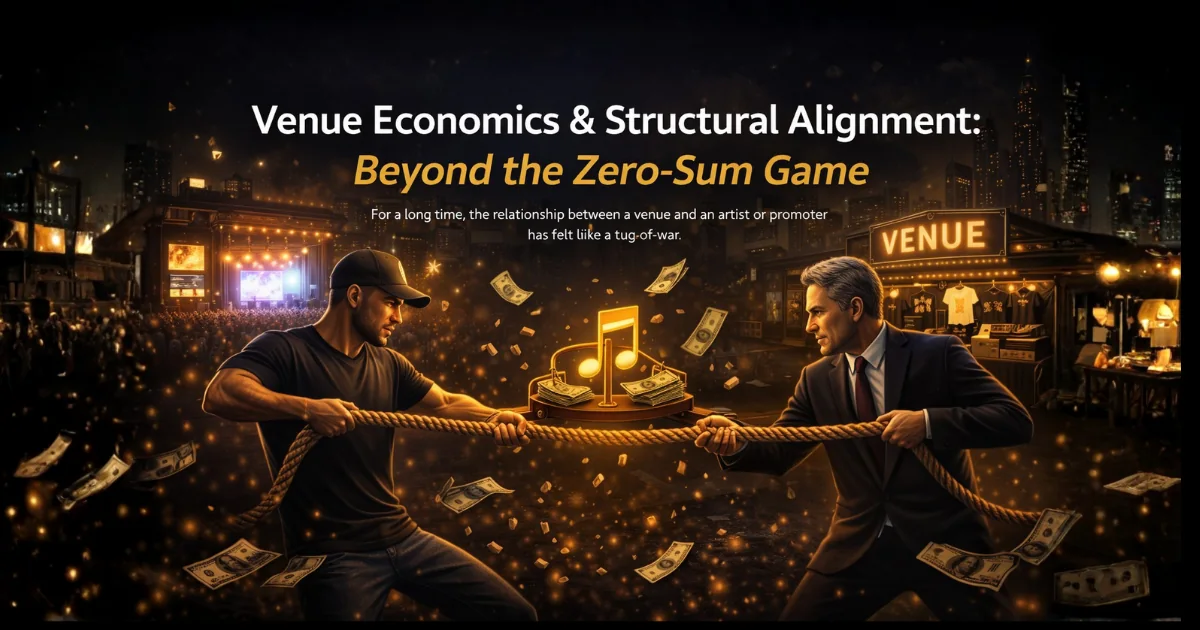
A lot of the stress between a venue and a tour comes down to the "settlement" at the end of the night. After a long, high-energy show, nobody wants to spend hours in a back office arguing over crumpled receipts or trying to figure out why the numbers don't match up. This "tug-of-war" usually happens because everyone is looking at different sets of data. When you don't have a single source of truth, friction is almost guaranteed, and that can sour an otherwise successful night.
By enhancing the existing workflows you're already using with a Licensed Commerce Layer (LCL), you completely remove that guesswork. The LCL acts as a governed, neutral observer that tracks every single verified transaction as it happens. Because it's an authoritative layer, it doesn't "guess" or "estimate"—it provides a clear, real-time look at exactly what has been sold and when. This means that at the end of the night, the venue and the artist are looking at the same set of facts. There's no need for a debate because the data is transparent and organized.
When you have Facts Over Friction, the whole "vibe" of the partnership changes. It builds a level of trust that you just can't get with old-school manual tracking. Since the LCL handles the logic and the "rules" of the event-scoped commerce, it creates a clean audit trail that's easy for everyone to sign off on. This professionalizes the entire experience. Instead of the night ending with a headache, it ends with a handshake. You move away from being "opponents" fighting over a bill and move toward being long-term partners who are ready to do it all again at the next stop on the tour.
A Bigger Pie
At the end of the day, the goal of any show is to create a memory that sticks with the fan long after the lights go down. When the business side of a tour is a "tug-of-war," that stress eventually trickles down to the people in the seats. But when we shift our focus toward structural alignment, everything changes. By enhancing the existing workflows already in place with a Licensed Commerce Layer (LCL), we stop worrying about how to split a small, static amount of money and start figuring out how to grow the opportunity for everyone involved.
A venue that's easy to work with—and an artist that has total control over their brand—is a winning combination.
This isn't about complicated new tech or changing the way people do their jobs; it's about making the whole live event commerce experience feel as smooth as the performance on stage. When the buying process is simple, the data is honest, and the timing is perfect, the fans buy more, the venue runs better, and the artist can focus on the music.
When we use an LCL to align the business goals of the venue with the creative goals of the artist, we're not just fixing a transaction—we're building a better industry. We move away from fighting over crumbs and toward a future where every show is more profitable and every fan goes home with exactly what they wanted. That's the kind of partnership that keeps the live event world thriving.